
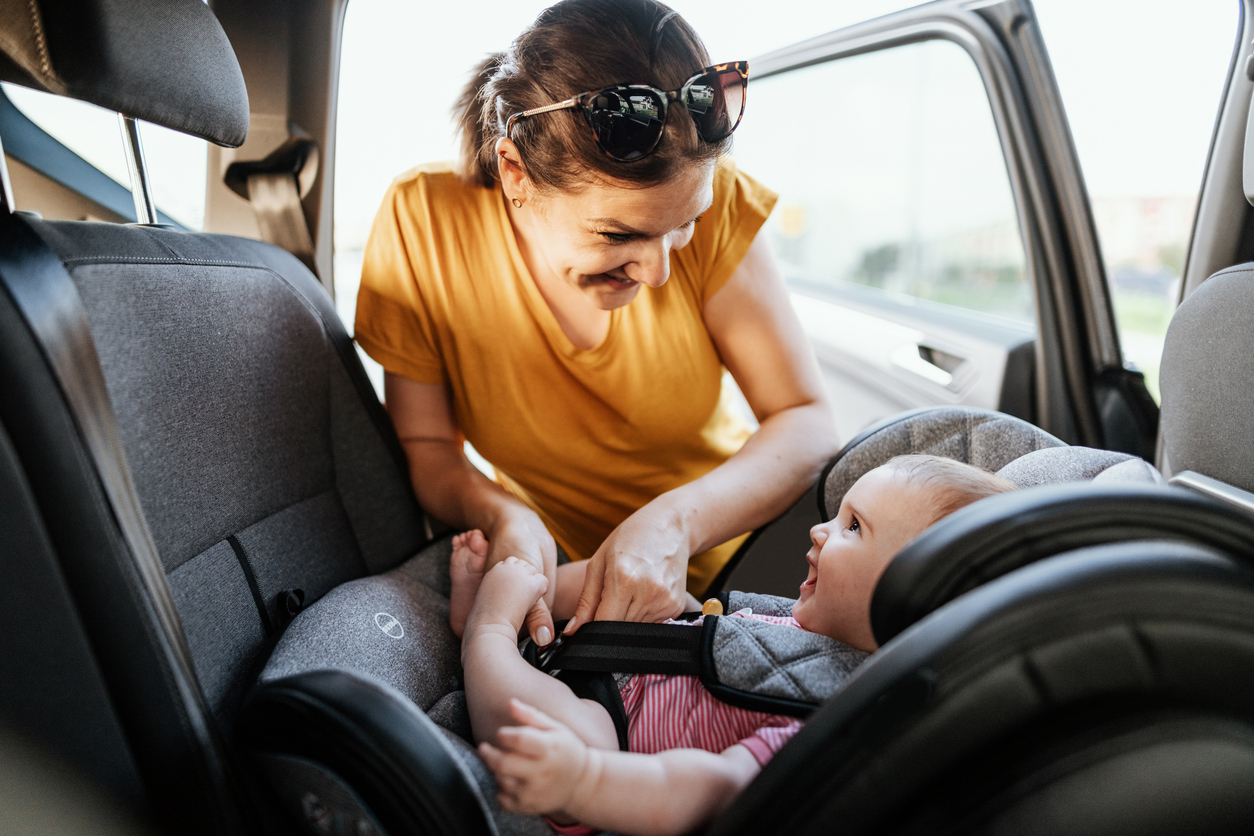
Few moments compare to the panic of a crash with your child in the back seat. The vehicle stops, but your mind keeps racing: Was the harness tight enough? Did the booster shift? Will the seat keep them safe? South Carolina’s child passenger restraint laws answer those questions before a collision ever happens by spelling out exactly which seat your child needs at every age. If your child was hurt in a wreck caused by another driver, a South Carolina personal injury attorney at Willcox, Buyck & Williams, P.A. can help your family pursue the compensation needed for medical care, recovery, and the future.
What Are the South Carolina Car Seat Laws?
South Carolina’s child passenger restraint law (S.C. Code §56-5-6410) applies to every driver transporting a child under 8 years old on public streets and highways. The required seat type depends on the child’s age and size, with each stage building on the last. The law was significantly updated in 2017 to align with current safety research, so older guidance you may remember no longer reflects the current rules.
Rear-Facing Car Seat: Under 2 Years Old
Infants and toddlers under 2 years old must ride in a rear-facing child passenger restraint system in a rear passenger seat. The child must remain rear-facing until they exceed the height or weight limit set by the seat manufacturer.
Many newer convertible seats accommodate higher rear-facing limits than older models, so your child can stay in this position well past their second birthday. Federal traffic safety experts recommend keeping children rear-facing as long as possible. This orientation provides the strongest protection for the developing head, neck, and spine in a frontal crash.
South Carolina law requires rear-facing only until the child exceeds the seat manufacturer’s height or weight limits. Keeping children rear-facing longer than the law requires is a best-practice safety recommendation, not a legal mandate.
Forward-Facing Car Seat: Age 2 and Up
Once your child is at least 2 years old, or has outgrown the rear-facing seat under that age, they must use a forward-facing child passenger restraint system with a harness in a rear passenger seat. They stay in this seat until they exceed the highest height or weight limits the manufacturer allows.
South Carolina Booster Seat Law: Age 4 and Up, After Outgrowing the Forward-Facing Seat
When a child is at least 4 years old and has outgrown the forward-facing seat, they must use a belt-positioning booster seat in a rear seat of the vehicle. Age alone does not trigger the booster requirement, a 4-year-old who has not yet outgrown their forward-facing harness seat must remain in that seat.
The booster must be used with both the lap belt and the shoulder belt. Booster seats may not be used with a lap belt alone.
A booster lifts your child so the adult seat belt fits across the strongest parts of the body. Without a booster, the lap belt can ride up onto the abdomen and the shoulder belt can cross the neck, both of which cause serious injury in a crash.
Adult Seat Belt: Age 8 or 57 Inches Tall
A child at least 8 years old or at least 57 inches tall may be restrained by an adult safety seat belt only if the child can be properly secured as defined by the statute. The law requires all three of the following to be true:
- The lap belt fits across the child’s thighs and hips, not across the abdomen.
- The shoulder belt crosses the center of the chest, not the neck.
- The child can sit with their back straight against the seat back and their knees bent over the seat edge without slouching.
If your child meets the age or height threshold but the belt does not fit correctly, keep them in a booster until it does. The law requires proper fit, not just a calendar age.
When Can a Child Ride in the Front Seat?
Under S.C. Code §56-5-6420, a child under 8 may ride in the front seat only if the vehicle has no rear passenger seat, or if all rear seating positions are already occupied by other children under 8. The child must still be in the correct restraint for their age and size, rear-facing, forward-facing with harness, or booster, as required by §56-5-6410. The front seat location does not change what type of restraint the law requires.
Even when a child legally qualifies for a seat belt, public safety agencies recommend keeping children in the back seat until at least age 13. The back seat is significantly safer in head-on crashes and removes the risk of injury from the front passenger air bag.
What Are the Penalties for SC Car Seat Regulation Violations?
Violating South Carolina’s child-restraint law is a primary offense, meaning an officer may stop you based solely on seeing a child who is not properly restrained. A conviction carries a fine of up to $150 and does not add points to your driver’s license. The court can waive the fine if, before or on your court date, you supply evidence that you have bought, acquired, or rented a child restraint system that meets the law’s requirements.
Does an Improper Car Seat Hurt My Child’s Injury Claim?
No. This is one of the most important provisions in South Carolina’s child passenger restraint law. Under S.C. Code §56-5-6460, a violation of the car seat statute does not constitute negligence per se or contributory negligence, and the violation itself is not admissible as evidence in any civil action.
In plain English, if another driver caused a crash that injured your child, the at-fault driver and their insurer cannot use a car seat issue to reduce or deny your child’s injury claim. The focus stays on the at-fault driver’s conduct, where it belongs.
South Carolina personal injury claims are generally subject to a three-year filing deadline under the state’s statute of limitations for injuries to a person. For minors, the clock is typically paused until the child turns 18, at which point the three-year filing period begins, meaning a child injured in a crash generally has until age 21 to file their own claim.
Some claims, including those against government entities or involving medical providers, may have shorter or different deadlines. Consulting an attorney promptly protects against missing any applicable deadline. Parents may also pursue a claim on the child’s behalf immediately, which is advisable while evidence is still fresh.
What Should I Do After a Crash With My Child in the Car?
In the chaotic minutes after a collision, it is easy to overlook steps that matter for both safety and a future injury claim. If your child was in the vehicle:
- Get medical attention right away, even if your child seems unhurt. Children often do not show symptoms of internal or soft tissue injuries immediately.
- Preserve the car seat. Do not throw it away after a moderate or severe crash. The seat is evidence, and most manufacturers recommend replacement after any non-minor collision.
- Photograph the seat in place before removing it, and document any visible damage.
- Get the police report number and the other driver’s insurance information.
- Avoid giving a recorded statement to the other driver’s insurer before you have spoken with an attorney.
Keep a simple timeline of your child’s symptoms, medical visits, and any changes in behavior or sleep in the days following the crash. Also save receipts, medical records, and any communications related to the incident, as these details can become important if injuries develop or a claim is pursued later.
Talk to a South Carolina Personal Injury Attorney About Your Child’s Crash
If your child was injured in a crash caused by another driver, the team at Willcox, Buyck & Williams, P.A. can help you understand your options and pursue the compensation your family deserves. With offices in Florence and Myrtle Beach and more than a century of trial experience, we represent injured South Carolinians across the Pee Dee, the Grand Strand, and surrounding counties. Contact Willcox, Buyck & Williams, P.A. to schedule your initial consultation.